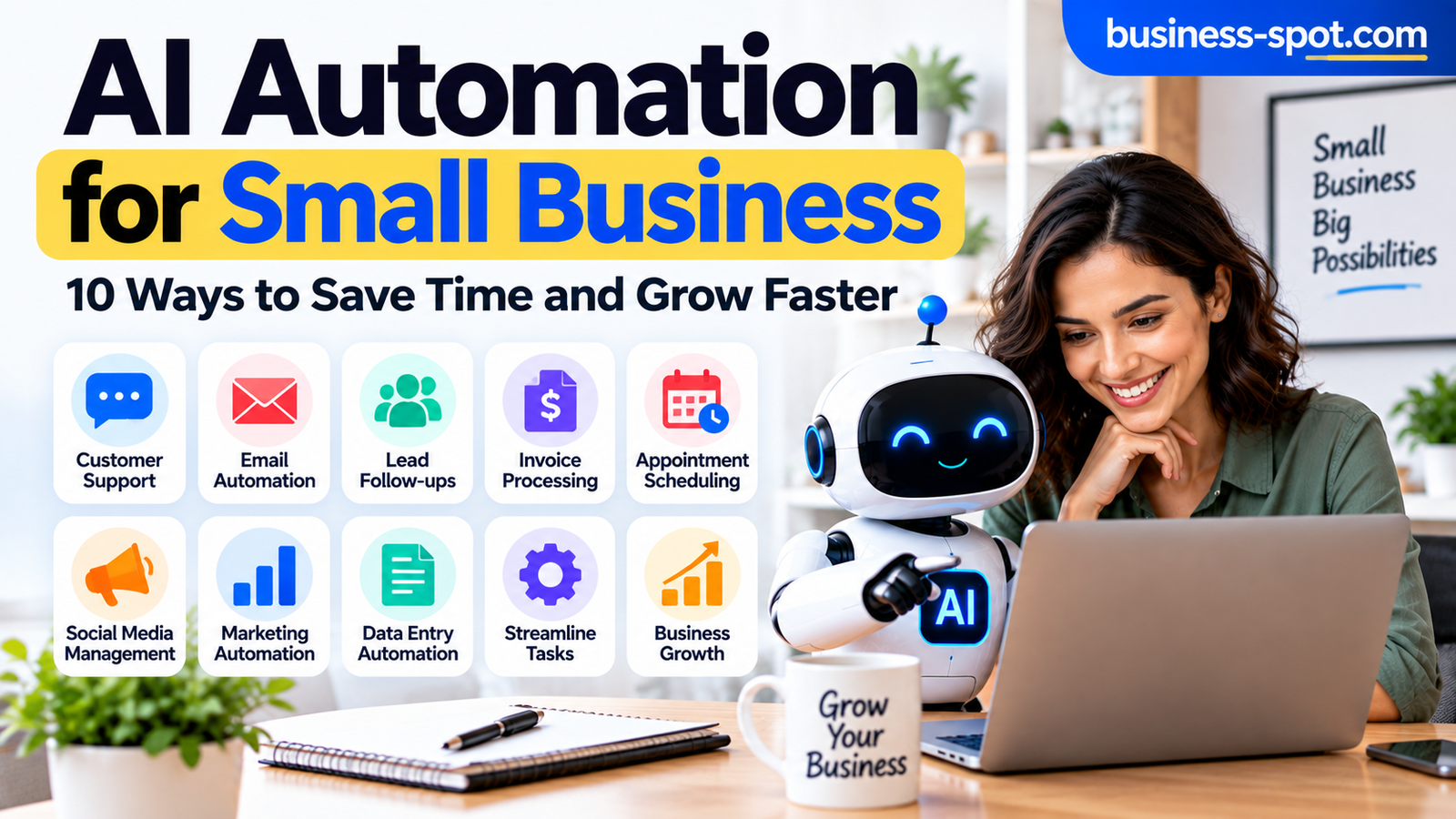
Artificial intelligence is no longer limited to large technology companies.
Small businesses are using AI for writing, customer service, research, marketing, data analysis, meeting notes and other everyday tasks.
The biggest opportunity is not simply using AI because it is popular. It is finding repetitive tasks where AI can genuinely save time without reducing quality.
Table of Contents
How Can Small Businesses Use AI?
1. Content Ideas
AI can help businesses turn customer questions into potential blog topics.
Instead of starting with a blank page, a business owner can provide its industry, audience and goals and ask for a list of relevant content opportunities.
2. First Drafts
AI can create a starting draft for:
- Blog posts
- Product descriptions
- Email campaigns
- Social posts
- FAQs
The final content should still be reviewed and edited by a human.
3. Customer Support
AI-powered support tools can answer routine questions and direct more complicated issues to employees.
This can be particularly useful outside normal business hours.
4. Meeting Summaries
AI meeting tools can turn conversations into notes, action items and summaries.
This can reduce the time employees spend manually documenting meetings.
5. Email Assistance
AI can help organise information and draft routine responses.
Employees should review important emails before sending them.
6. Social Media Planning
A business can use AI to brainstorm:
- Post ideas
- Captions
- Content calendars
- Video concepts
- Frequently asked questions
The brand’s final voice should remain under human control.
7. Market Research
AI can help organise publicly available information about markets, competitors and customer needs.
Important business conclusions should be checked against reliable primary sources.
8. Data Analysis
Businesses often have spreadsheets full of information but limited time to analyse them.
AI can help identify patterns, calculate metrics and explain data.
Sensitive information should only be used with systems and workflows appropriate for that information.
9. Sales Follow-Ups
AI can help sales teams prepare follow-up messages and organise prospects.
The system should not send important communications automatically without appropriate controls.
10. Employee Training
Businesses can use AI to create training questions, explanations and practice scenarios.
Human managers should still verify the accuracy of training materials.
What Should Businesses Consider Before Using AI?
AI is not automatically accurate.
A business should think about:
- Data privacy
- Accuracy
- Human review
- Cost
- Security
- Vendor reliability
- Integration with existing systems
How to Choose an AI Tool
Start with the business problem.
Don’t begin with:
“What is the best AI tool?”
Instead ask:
“What repetitive task takes our team the most time?”
Then compare tools based on:
- Features
- Price
- Ease of use
- Security
- Integrations
- Export options
- Team controls
- Reliability
Final Thoughts
AI can give small businesses useful productivity advantages, but the best results usually come from focused implementation.
Choose one repetitive process, measure how much time it takes today and introduce AI carefully.
The goal should be better work—not simply more automation.